Snow White Wine
Some light research about the color of wine in antiquity.

During the Passover seder this past week in Cambridge (UK), the gentleman sitting to my right introduced himself as a scholar of archeobotany and paleoethnobotany, basically, someone who researches plant life in late antiquity.
When he asked me if I would prefer red or white wine to fill my glass, I noted the research I had done several years ago for one of my earliest newsletters, regarding wine in antiquity, and how historically they did not use maceration, leading all wine to be various shades and hues of white or golden, which is why the Talmud never discusses red wine in its description of the traditional Passover seder.
 Ezra Butler
"Still," I continued, "as I believe that traditions are able to evolve and develop new meanings and significances, I'd prefer a glass of red wine."
I ended up drinking four.
I ran into him again several days later and he asked me, "have you ever heard of Gazan wines?" He explained that during the 4th-6th centuries, the port of Gaza exported a wine which was described in Byzantine sources as white. As one would only need to indicate white if there were also non-white wines, he questioned if this reference may disprove my conversation starter.
If you've been a longtime reader of the Colorphilia Newsletter, you'd know that many words can be translated into white, and when we look at the original text we can see if they are highlighting the hue, the brightness, or something else entirely!
During this process, I did discover some more sources for "red wine" in antiquity, but I question the validity of the translation, as I will show below.
Gazan Wine
The source that people quote about the white nature of Gazan wine is from a laudatory poem (In laudem Iustini Augusti minoris) for the Justinian II by Flavius Cresconius Corippus. Corippus describes roughly ten wines from all over the empire which were served at the banquet celebrating the coronation of the Emperor Justinian and Empress Sophia following the death of his father.
The line in question was:
prisca Palaestini miscentur dona Lyaei,
alba colore nivis blandoque levissima gustu.
The ancient gifts of the Palestinian Lyaeus were mingled in,
white with the colour of snow and light with bland taste.
In Laudem Iustini, 3:98-99
This is the translation by Averil Cameron from 2003.
Somehow, though, in a journal article from 2020 titled "Wine from the Desert: Late-Antique Negev Viniculture and the Famous Gaza Wine", they cite the same source with a slightly different translation:
the ancient gifts of Palestinian Lyaeus were mingled in,
white with the color of snow, exceedingly light and with an agreeable taste. (Corippus, In Laudem Iustini 3.88; trans. Cameron 2003)
While "bland" now has the connotation of tasteless, it originally meant the opposite. Also, the word levissima from the superlative of levis means light as in weight, not light as in opacity or color. My problem is less with the translation, which I understand why they altered, but that that they presented it as Cameron's translation.
Wild and Unfiltered
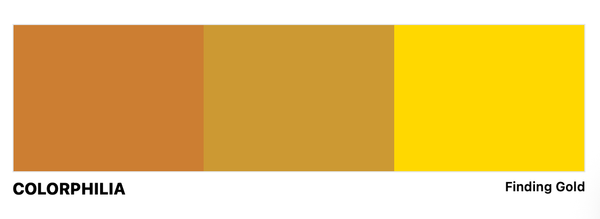
But let us focus on the phrase "alba colore nivis", or "white with the color of snow".
One would be hard-pressed to describe most white wines as "white with the color of snow". Ironically, the only wine I would use this language to describe is a specific type of rice wine: the unfiltered nigori-zake or doburoku (濁酒).
Doburoku is the ancient Japanese unfiltered rice wine, which literally means "muddy alcohol", which seems to have been considered a lower class drink from the villages. My personal experience is limited to nigori, which actually means "muddy" or "unclean", but describing it as "white with the color of snow, exceedingly light with an agreeable taste" seems more apropos.
If we look at the actual reference to the wine from the region including Gaza,
et dulcia Bacchi
munera, quae Sarepta ferax, quae Gaza crearat,
Ascalon et laetis dederat quae grata colonis,
and the sweet gifts of Bacchus,
which wild Sarepta and Gaza had created, and
which lovely Ascalon had given to her happy colonists;
In Laudem Iustini, 3:87-89 (emphasis added)
However, if we read the translation in the above-quoted journal article, ferax is changed.
sweet gifts of Bacchus, which fruitful Sarepta and Gaza had created
and which beloved Ashkelon had given to her prosperous colonists
(emphasis added)
What was once "wild" is now "fruitful".
What's even more is that the wine described immediately before "the ancient gifts of Palestinian Lyaeus" was describing the translucent Italian wine produced from the Aglianico grapes which grow on the slopes of Mount Falernus.
quae vitreo fragrabant plena Falerno.
prisca Palaestini miscentur dona Lyaei,
fragrant, full of glassy Falernian.
the ancient gifts of the Palestinian Lyaeus were mingled in,
In Laudem Iustini, 3:97-98
The word miscentur is from misceo, which could be a way to describe mixed wine (as in wine diluted with water), but could also describing the turbulence of a storm.
On the one hand, we have a beautiful transparent wine from the Italian terraferma, and on the other hand, we have a deliciously cloudy wine from Mediterranean oltramare, and the inclusion of both of them together highlights the vast imperial reach of the Justinian's Roman Empire. The bottom line of the paragraph which lists these magnificent wines concludes with:
cuncta quis expediet, dominis quae parturit orbis,
Romano quaeque est provincia subdita regno ?
Who will tell of all that the world brings forth for her rulers,
all the provinces that are subject to the Roman Empire?
In Laudem Iustini, 3:103-104
In short, not only does this not indicate the existence of a "red wine", "white like the color of snow" is informing us that this was an unfiltered wine, but still delicious.
An Ancient Mint Julep
I discovered a different article titled "The Mediterranean Vocabulary of the Vine" from 1969 which included line from Greek, in which the Goddess refuses to drink red wine, preferring instead a mint julep (as described by the author of the piece).
In the Homeric Hymn to Demeter (207-9) the Goddess refuses to drink straight wine, "for she said it was not proper for her to drink red wine, but told [Metaneira] to mix in meal, water and soft mint and give it to her to drink"
Here, the phrase "red wine" in Ancient Greek is οΐνον έρυθρόν (oinon eruthron), which is a quite literal reading of the phrase. But as we've seen earlier, the way they would describe a wine in antiquity would be by the name of the city of origin, not color of wine. So this is exactly how they would have described a wine (of whatever color) from the city of Ἐρυθραί (Erythrae).
In the same vein, if we would describe something as a "Phoenician wine", we would recognize that it is from Phoenicia, not a red wine which approximates the red color of the phoenix tail, even if they would be described using the same words in Ancient Greek.
As an aside, it makes a lot more sense for the goddess of grains to drink a fermented or distilled liquor from grains than one fermented from grapes.
Have any color-related question or curiosity? Supporters with paid subscriptions may email me a question, and I'll research and write a 750-1500 word response.
Please consider a paid subscription to help support my research, or get a free subscription and consider giving a one-time tip.