The (Turquoise) Ship of Theodorus
A colorful thought-experiment.

Overview
The "Ship of Theodorus" is an original take on the famous thought experiment of the Ship of Theseus. In my version, Theodorus' ship evolves from the day it was built until the current day, and while it may be somewhat unrecognizable by the end, it is still the same ship. It is based on a story of a Christian legend which I've traced from its origins in 8th century Constantinople to 16th century England.
There are several reasons I've created this colorful thought experiment:
- This newsletter is called Colorphilia, and apparently should be somewhat related to color.
- I learned something new.
- It's my 45th birthday on Wednesday, so a time for personal retrospection.
In honor of my birthday, I'm having a one-time sale, $45 for the first year subscription. It is simply a kind way to help support my research. Annual paid subscribers may send me a color-related question which I will research and write an original 500-750 word answer. Or please consider getting a free subscription and consider giving a one-time tip, you know, for a birthday drink or something.
Turquoise
For the past several years, I've been introducing myself as someone an interdisciplinary researcher of the history and language of color. Roughly 27% of the time I'm informed that all color is subjective, meaning we all see our own versions of colors, and did I know that the ancients Greeks didn't even see the color blue?
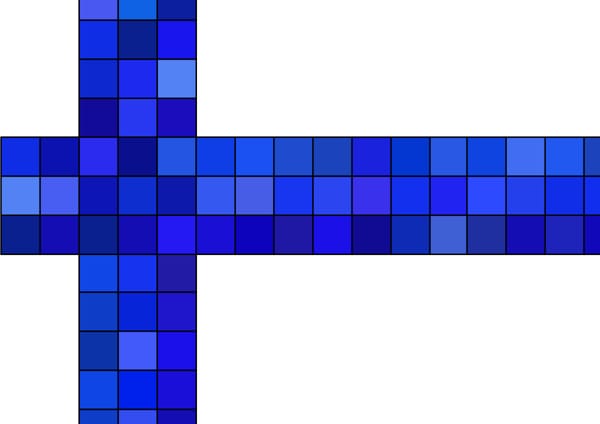
Sometime in 2024 it seems that someone created a simple online test called Is My Blue which prompts you various shades of turquoise and asks you if is are green or blue, and then the site announces your personal boundary hue where green turns to blue. You then receive a fun link to share with all of your social media followers to ensure the "virality" of the test.
Color is actually quite objective and prescriptive these days. This obsession with a shade needing to be either "green" or "blue" is proof of that. And I don't like it. We've seen that the color of actual indigo pigment is no longer described as "indigo". The turquoise stone is a spectrum within itself. Persian turquoise tends to be more blue and turquoise from the Western US tends to the green. The same physical turquoise stone could shift from blue to green with more exposure to sunlight.
None of us perceive anything the same way. I'm not quite sure what makes the rather arbitrary imaginary boundary between green and blue a better example of this phenomenon than anything else.
It's even more than that. It feels like it's forcing a false binary. We even have a whole family of colors used to describe the space between blue and green, including (off the top of my head): turquoise, teal, cerulean, aquamarine, celadon, glaucus, and more.
Each has a history and meaning, and it is impossible to differentiate a teal from a turquoise, because they are objective, discrete representations of a whole class of feathers or stones.
Current Research
This is not the topic of my current daily research. As you may know, sometime last year I asked the question whether Robin Hood wore a red head-covering, and that took me down a rabbit hole which led me to learn color-related things like that Lincoln Green never actually existed, instead, it was a shade of verts encre (ink green), but also, the whole "the character of Robin Hood was mostly likely created by crypto-Jews in Scotland around 1330" theory. And I apologize for repeatedly writing about this.
Interdisciplinary
I use the term "interdisciplinary" because I never have any idea what I am going to discover on any given day. I understand that the average reader interested in color doesn't actually care the linguistic analysis of medieval texts in whatever language they may be. It fascinates me, but apparently I'm weird.
But even more than that, I never know what one discipline is going to teach me about another. I personally feel that if the only people who study something are from one background and have the same knowledge base, they are all going to ask similar questions and make similar discoveries.
Experimental Backstory
Recently, I was chatting with a rather curious gentleman here in Cambridge, who happens to hold a doctorate in virology. I was telling him about the Christian legend I've been analyzing over the past several weeks.
It originated in Constantinople around the 8th century and evolved through the centuries as it made its way to Western Europe and England. I've examined medieval versions of the story in Greek, Latin, French, Spanish, Old Norse, and, of course, English. I also made a discovery of a Jewish reinterpretation of the legend, with four versions in rabbinic Hebrew and one in Yiddish.
The legend could be described as having the "divine being as surety" archetype, which basically means that someone offers their god or saint as a guarantor on a loan, and when they are unable to repay on time, there is either a miracle or some other form of divine invention which results in the successful, timely repayment of the loan.
In the Christian original, Theodorus the Christian borrows money from Abraham the Jew, who lies about the loan being repaid. In the Jewish variant, the borrower is a non-Jewish Roman matron, and the lender informs him that the loan has not only been miraculously repaid, but also refunds the difference between the amount of the loan and the value of the repayment. (This happens in the Robin Hood story.)
I was really excited about the fact that the Jewish reinterpretation evolved together with the Christian legend, with the variant frequently referencing changes in original.
When I had described my analysis as a form of "genetic narratology", he mentioned the example of a species in a rainforest who independently evolved as they made their way down two sides of ravine, and by the time they reached the end, it had effectively evolved into two species who were incompatible. In my case, both versions were blended back together in the Geste of Robyn Hode.
While the discovery and analysis of the Jewish texts allowed me to better reconstruct the evolution of the Christian story, I was missing the correct model to describe the relationship between the Christian variants.
Similar to the Is My Blue site, the extremes of the spectrum are very different. Everyone agrees that the furtherest points on either side are either blue or green. The question is where the boundary lies.
Legendary Backstory
When the legend originally told in Constantinople, Abraham the Jewish moneylender is portrayed in the most positive of lights, and Theodorus the Sailor is considered to be a member of the naukleroi class of seamen. Suffice it to say that they weren't perceived to be the finest of characters.
[T]he Emperor Theophilus ordered the destruction of a ship chartered by his wife, for, he said "God has made me Emperor, and you should not transform me into a naukleros!"
– Robert S. Lopez, "The Role of Trade in the Economic Readjustment of Byzantium in the Seventh Century", 1959
The story was likely originally a hagiography of how Abraham, the pious, eponymous founder of the Monastery of the Abramites, converted to Christianity after experiencing a miracle. By the time the story is told in Spain, for example, around the 14th century, the lying Jewish moneylender is most likely killed on the spot after converting.
A 19th century version English version of the story is called "Abram the Usurer" (download embedded above) even though there is absolutely no usury done in the story. Abram even loses money on the entire deal.
The thing is, there doesn't seem to be an explicit change at any point where the plot was dramatically changed. In the terms of the blue-green color test, no discrete boundary line exists.
Viral Narratology
There are obviously certain details added, changed, and removed because every time we retell a story we adjust it slightly to our audience. The storyteller is never actively telling a new story. The story slowly evolves in an unrecognizable manner over the course of 700 years, but we can never identify the exact moment it changed.
- Why does it become a Marian miracle when it was first told about Jesus? As the word for sea in Latin is mari, inherent in the translation is a subconscious focus on Mary.
- No one needs to the medieval Western European Christian audience that the Jewish moneylender was, in fact, the villain. So, at some point, someone added a word about how pious the borrower was, because it made it a better story.
- The social commentary of the naukleroi class had been forgotten, so the borrower is merely described as a merchant. (See link to article above by Lopez.)
Viral Evolution
I asked the scientist about the difference between sexual, asexual, viral, and bacterial reproduction. After his fascinating impromptu lecture, I realized that the closest biological analogue to this story was a virus. A virus evolves slightly every time it attaches to a new host, so the difference between the original virus and the latest evolution can also be as wide an expanse as the sea of turquoise in the Is My Blue test.
While we can artificially create markers and give names to particularly variants, which can be useful in virology, I wonder if it is helpful to force someone to define a shade of turquoise as either green or blue.
Viral Tulips
As I noted last year, one of the things that made tulips so valued in the Netherlands during the 17th century was that they had accidentally been infected with a virus which potentially "broke" the colors in the most beautiful ways.
Each version of the flower was considered to be its own unique pattern, which would likely never be exactly reproduced again. That is what made it so precious.
Comparing The- Ships
In the thought experiment called the "Ship of Theseus" originally recorded by Plutarch, each of the wooden planks of a ship is swapped for a similar one until none of the original wood remains, yet we still describe it as the same vessel. From a functional and visual point of view, it seems to never change.
The "Ship of Theodorus", on the other hand, is constantly evolving. It features frequent small changes, like a unique paint job, a different mast, or a new oar. But from the time of its original creation to its final iteration, it becomes almost unrecognizable, yet at every point we can say, this is the same ship.
Personal Note
The act of curiosity is a profoundly transformative one. Whether it's an unexpected conversation or experience, a theory which is proven, or an experiment which fails, you are changed, and it will affect how you look at the world in the future.
But you are still fundamentally the same person as you were before the encounter. There is a cumulative effect, which means that after 45 years you may look slightly different than you looked at the beginning.
It has been a year of unknowns, but one which I have spoken with my mother nearly every Friday, even if only for a minute. I spent time in the country where her parents were born and where her ancestors had lived for many generations.
My grandfather, Abraham, was a pious, caring, kind man, much like the fictious Jewish moneylender in the original versions of the legend. He dealt in scrap metal, which was the focus of the original legend. And he never lost his faith even after experiencing hell on earth and losing his entire family.
As Robert Lopez writes in his piece, the legend "was retold through the years in many countries undergoing changes with each retelling until finally the generous Abraham became Shakespeare's Shylock."
The reason it was important for me to trace back the history and discover the origins was because I read the following a parenthical note by one of the leading scholars on Robin Hood:
the loan is repaid by an actual miracle of the saint or deity and the moneylender is an unbeliever (usually a Jew) who is converted to Christianity by the miracle.
– Ohlgren, Thomas, H. 'The "Marchaunt" of Sherwood' in Robin Hood: the Early Poems 1465-1560, 2007. pp. 151-153
At that stage in my research, I had no idea what the history of the legend was. I didn't know that the character was originally portrayed as good and pious. But the one thing of which I was nearly certain was that at that place and time in history, the moneylender was undoubtably a Jew.
That that scholar seemed not to question for a moment, "why did the creator of Robin Hood cast his hero in the stereotypical role of the Jewish moneylender?" before deciding to change the archetype's identity to "generic unbeliever" is why I feel that it is important to rediscover and retell the original story of the creator.
It may seem silly, but that's why I've spent nearly six months this past year alone researching this project. The next step, of turning all this research into a book, seems a bit more daunting. But that's why I'm doing it.
Why is the ship turquoise?
The etymology of turquoise originates from the same place as the name of the Republic of Türkiye, and 8th century Constantinople is modern-day Istanbul, so Theodorus would more likely be named something like Tanrıvermiş, if he lived today.